Showing posts with label Peter Gray. Show all posts

Tuesday, October 29, 2013

Rage and imprisonment


I've mentioned The Evergreen School before.

I don't recall the details of why I started going there, but I remember liking the environment on my first visit. I remember all of the student books around the library. I remember the copy of Shoeless Joe by W. P. Kinsella that I looked at often over my time there, but never got around to reading.

I mention this, because most of the things, positive and negative, that makes the things I read by Peter Gray resonate so thoroughly for me. I try to explain some to Rae and tend to say she should read his blog or his book, Free to Learn: Why Unleashing the Instinct to Play Will Make Our Children Happier, More Self-Reliant, and Better Students for Life, when we get it. Last night she expressed the concern that I was merely parroting back someone else's philosophy and I had to explain that the issue isn't me parroting back what he said, but that he so perfectly expresses the things I've felt for so long, and backs them up with such great evidence and examples.

I don't remember much about my days there. I couldn't tell you any which way what I studied. As adults, we joke merrily how we don't remember what we "learned" in school as if that was either our failing or an amusing piece of happenstance, rather a core flaw in how our schools work.

My parents paid a lot of money that they couldn't easily afford to send me to these schools.  I'm not certain I can find the same casual amusement in that as everyone else does.

I remember one teacher, Ron Cohen, who taught me about musical theater.  He also had a mock trial of Harry Truman for war crimes and crimes against humanity for the bombings of Hiroshima and Nagasaki.  I don't know that I gained what I was supposed to from it.

I did watch Give 'em Hell, Harry! in there and still think of Truman and the movie fondly.

I remember being frustrated that I didn't think that the jury fully understood their job and took too much of their initial beliefs into the jury box rather than what was argued.  I also don't recall there being clear definitions of the crimes for them to work from, just their loose understandings, same as when they came in.

His class was also where I wrote "The Case of the Playground Monitor", which I think was kind of the Quentin Tarantino of early '80s short stories by eleven-year-olds.  It was popular but divisive, excessively violent, featured stretches of profanity and jumped around through storytelling styles.

I might have oversold it, but luckily I don't have a copy around to disappoint you...  nor does the school.  The first time in the school time in the school's history they didn't maintain a copy to show off to new parents and students.  I took a fair amount of pride in that at the time.

Now, I just feel angry.

I was kind of off to go with the writing thing.  I was pretty proud of myself.

Now, I'd always been a socially awkward kid, or considered myself so.  I don't remember ever feeling comfortable around other people - being a confusing character like The Loud Extrovert and 30 years from beginning to understand it was a factor - and I'd long felt picked on and never took well to it.

But I'd become friends, for a time, with my one-time rival, and easily the coolest kid I knew in the whole 12 years I was confined to be educated.  His name was Quentin.

I don't remember the details of us moving from rivals to friends.  I know it happened on the playground, though.

We played Four Square and a team version of "Smear the Queer" that, as best I remember, we largely made up.

(I'll briefly jump in to say that Wikipedia article on Tag provides a variety of alternate names for this game, starting with the decidedly British "muckle" and the incredibly awkward "kill-the-guy-with-the-ball". It was the '80s and we were of the right pre-teen age that homophobic slurs did occur, but I can't remember any suggestion of the game's name being one of them.)

We weren't allowed to play the game.  Not because of the name, but because it involved tackling.  If someone was watching, we had to switch to two-hand touch, which frankly ruined the game completely.

We read Savage Sword of Conan and tried to draw like the artists in it.  We read the Robert E. Howard Conan stories and wrote our own pastiches, but both agreed that we avoided the ones by L. Sprague de Camp and Lin Carter that were shoehorned into our beloved paperback books.

He was better at drawing than I was, although I couldn't trust my memory well enough to say it was good by a standard other than what an eleven-year-old does.  I also feel like I was better at writing, but I could be being kind to myself, as I hate to be so far behind Quentin on everything, but it is possible, as I suggested, he was really, really cool.

I had other issues going on in my life, including some turmoil and major changes in my home that had probably left me unsettled.

But there were some kids a year or two older than me who liked to flip me crap.

As when Quentin had flipped me crap a year or two previous, I tended to respond by getting into physical fights.  This had been a recurring issue in my life.

Somewhere between the increasing concerns about my fighting and the "disturbing" trends in my writing, I was made into the problem.  I'm sure no one involved told me that, and perhaps no one even really thought that, but that was the "lesson" I took away.

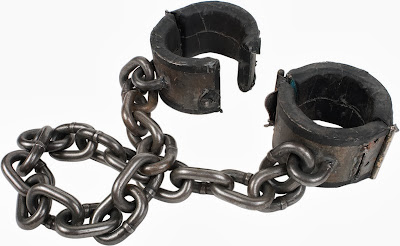
People fucking with you is something you're just supposed to expect and "ignore" when you're a kid.  As noted, here, that's because it's a prison.  In a prison that's a normal expected factor and you need to man-up and deal with it.

In all of this it was my anger that was considered a problem.

At least that's how I took all of it.

If I took action on my anger then I was misbehaving.  "In trouble", as the saying goes.  "Bad", as all kids inevitably when they are "in trouble".

No, I'm not really defending fighting as an expression of anger, however coming up with a way to express my anger productively was decidedly not on the table.  I was told to "ignore" it all, which is a load of horseshit.


When I tried to work it out, express it creatively, that, of course, added fuel to the fire of me being a "concern".

I learned, for a long time, not to express my anger at all...  or barely.  It all turned inward.  I've never really gotten past the tendency to turn all the anger I have, whether personal or toward the great injustices of the world, on myself eventually.  Nothing does more to set me into a bleak depression than getting mad, even if justifiably.

That's that legacy.

Somewhere in there I became scared of my voice as a writer and stopped writing with any regularity, despite always thinking of myself as a "writer" and "writing" being the thing I was going to do.  And occasionally I do.  I write all the crazy, bloody, fucked-up shit that got me "in trouble".  I've never seriously considered writing anything else.  Was that just who I was already by then or is that another legacy?

I've been reading Killing Monsters: Why Children Need Fantasy, Super Heroes, and Make-Believe Violence, which an incredibly insightful book by Gerard Jones.  Jones has incredible insights on children dealing with violence through violent play and media, and I'd love to just be celebrating that someone is just saying these things, but I'm not.

I'm angry.  I'm angry at people for not saying these things more.  I'm angry at people for not saying these things all along.

And, of course, I'm angry at myself, because that's what happens to me when I get angry.

Friday, October 18, 2013

Bullying


To some extent or another, we all think of bullying as a fact of life.

I confess it was I haven’t thought about the kid who bullied me in over twenty years by Wil Wheaton that pushed me to write this and not one of the more heartbreaking stories of suicide or other ways lives are utterly devastated by bullying.

Here's the thing, bullying is going to keep getting worse.  Period.

Keeping kids in school longer hours, giving them less free time after school.  I'm a 42 year old man, and I couldn't take that schedule.  I'm not the only one who thinks that.  My Daughter’s Homework Is Killing Me by Karl Taro Greenfeld makes that point as well.

Without the benefit of bullying, I can promise I wouldn't have survived childhood with that kind of schedule and I don't think I would now, although obviously I have Rae and Conan to make the effort to go on for.

I don't know if I'm the best example.  I certainly don't hit any norms.  I cut class in high school and would go to the library, try to avoid notice as long as possible while I read books until I was kicked out for not having a pass to be there and I'd go outside to smoke.

This is, I suppose, where it was cemented for me that School is a prison! and not a place to learn.  I certainly have more to say about that another day.

My point is that even at that point in my schooling, I wasn't broken.  I lacked the least inclination to obey, but I was still actively and enthusiastically interested in learning.  I just knew that school classes are rarely, if ever, the best medium for learning.  They are a primarily a medium for control and any real learning is largely incidental.

I wasn't bullied in high school, except by the school administration, but I was earlier.
No, I don't have any of those stories of relentless harassment.  I was just singled out by various other kids through the years for verbal abuse.  I didn't take it well.  I'd get into fights and then I'd be the one that got into "trouble".

It was a fine system, huh?

Let me just say, even this relatively benign stuff is still able to get me worked up.  If I think about those dudes, I feel like I could punch them again now.

But really, I know who the real enemy is and if I ran into any of those administrators from The Evergreen School from those days, I almost certainly would take the opportunity to finally punch them.  Yeah, it wouldn't do anything good.  Frankly, I'm quite happy to just never run into them.

That's where we come to School Bullying: A Tragic Cost of Undemocratic Schools by Peter Gray, "Bullying occurs regularly when people who have no political power and are ruled in top-down fashion by others are required by law or economic necessity to remain in that setting.  It occurs regularly, for example, in prisons. Those who are bullied can't escape, and they have no legislative or judicial power to confront the bullies. They may report bullying to the prison guards and warden, but the guards and warden may not know whom to believe and may have greater vested interest in hiding bullying than in publicizing it and dealing with it openly"

People who are disempowered learn that disempowerment is a standard way to live.  They then go about disempowering others to place themselves higher on the empowerment ladder.  It's basic.

It's even our stereotype, our joke even, that bullies are bullied at home.  We see that as the "punchline" of those things all the time, or, in more sensitive cases, the bittersweet realization we're brought to.

As with most stereotypes, it's, at best, incredibly simplistic, but almost certainly comes from something.  In some cases, they come from what the person doing in the stereotyping brings in.  It's certainly true that a substantial number of negative stereotypes about black people in the U.S. are rooted the expectations that slave owners had for their slaves that were insane expectations for a human.

In this case, we're probably enamored of the perceived irony of the bully being bullied, but I think there's a basic truth to it as well.  Those kids who are bullied at home are even further disempowered and, as such, have an even greater need to make themselves feel empowered by disempowering others.

And now we keep buzzing about the increasing "bully problem", while we take away more and more of children's freedoms.  In many cases, I'd strongly suspect this is a media problem more than a bullying problem.  The media likes to find some issue and blow it out of proportion in order to draw viewers/readers.

This one seems to have some real weight.  The stories we hear about bullying seem to have escalated in virulence now.  The "official" explanation has something to do with the internet, but I think that's at least 98% bullshit, thrown out because they either don't know or don't want to face the more basic truth about the nature of the schools that we send our children us to, and, more importantly, where our parents sent us.

In fact, in keeping with the basic philosophy, we're creating more and more rules to curb this issue.

Look, I'm perfectly happy with the two girls in this case be appropriately punished by the appropriate harassment and assault.  I even agree with Sheriff Grady Judd that there should be a way to put the bulk of the punishment onto the parents and administrators instead (or as well).  It's important to note here that I am not favoring the creation of new rules or laws here, just the serious enforcement of the ones already in place.

Most new rules will be counter-productive, making what is already a prison even more restrictive and, as such, greatly exacerbating the problem.

Tuesday, October 15, 2013

Holding us back


School holds us back.

There are many, many things wrong with schools, as they currently exist, that fail to do what we claim to want from the, but are, as the kids are saying, not a bug but a design feature.

Schools are supposed to teach us to stay in line, keep quiet and obey authority.  That students leave with less creativity and independence are features not bugs.

This relates, in it's way to Schools Are Good for Showing Off, Not for Learning by Peter Gray.  In that article, Dr. Gray discusses the flaws in both positive and negative reinforcement as teaching tools.

Today, I overheard someone discussing the book report her son had coming up.  He had, she said, selected a 400 page book to read and write on.  She was relieved that the teacher had managed to talk him out of this challenge and down to something easier.

I can think of no better example of what's intrinsically wrong with traditional schools.  In a school in which learning and improving oneself is the goal, overreaching can only be seen as a good thing, you're working the muscles.  It's only when the real goal is timed and graded that this could be an issue.

Believe me, I'm punctual.  I believe in punctuality.  I even suspect serial lack of punctuality is borderline sociopathic, although I admit that's probably an overreaction based on personal issues.  And, yes, I'm already broken by the system, something I definitely intend to address another day, which affects my punctuality.

I don't think our school system genuinely teaches that skill or any reason why it's important, aside from as an act of continued obedience, though.  I suspect that, in many ways, that makes it counter-productive in teaching it as a valuable skill and a courtesy to bestow upon those around you.

I think a child could benefit themselves, in knowledge, confidence and understanding the world, much more in challenging themselves to read the longer book than they gain reading a shorter one that they're more likely to be able to regurgitate some reasonably useless information back in order to achieve a competitive grade.

Yes, I thought all of these things all through school.  After my final breaking point, which was after school by a couple of years, because I was just that obstinate, I stopped thinking about it very much at all, except on rare occasions when someone would say something so outrageously pro-school that I'd go into an outraged rant, usually internally, but occasionally it would leak out.

Now that I'm raising a child and facing that future, I have to say I'm back to being a raw nerve.

At a work gathering at Rae's job, another guest described the work load at the kindergarten class she works in, and how little recess they got and how much homework they were given even at that young age.  I seethed.

I ranted at my poor spouse later about it and they said, "She just works there, it's not like she can do anything about it."

And I said, "Yes, I'm sure she's the nicest guard at the Concentration Camp".

(Yes, I took the conversation to Godwin's Law territory that quickly.)

Now, I'd probably go for the less ambitious School is a prison! argument, which would sound mildly less dramatic.

However I phrase my response, I can only imagine Friedrich Fröbel rolling in his grave.

We respond to our students struggling more and more to learn from our schools by exacerbating all of the things that are causing the problem in the first place, and get, as one could only expect, receiving worse results, at least by the arbitrary standards we set. See Educational Reform by Daniel Greenberg.

And while it's undoubtedly more complicated on some levels, I think that it speaks volumes that school, as well as parents, knee-jerk to preferring a better grade, and perhaps a more timely assignment, to something that would be more likely to stretch this growing boy's horizons and exercise his mind.

You can say what you want.  I've "evolved" to hesitantly moving toward accepting a "school" type environment in my last post, Thoughts on school, but I was always a little open to something along those lines.

I'm not budging from there, though.  There's no way I'm sending my child to a public school.  Not even a consideration.

Monday, October 14, 2013

Thoughts on school


Rae and I are looking at Clearview Sudbury School for Conan.

It's kind of a big step in thinking for me, because I had been very resistant to any kind of school. I wrote School and socialization at my other blog, before I started this one.

In that post, I wrote, "My experiences at the private Seattle Country Day School and the The Evergreen School feel as constricting, personally and intellectually, as the ones I had at the public Olympic View Junior High and Mariner High School."

And here I should note, as I neglected to in the earlier post, that not only were the first two private schools, they were intended, to one degree or another, to be provide an alternative teaching method. Something I think the result of which was little different, if at all, than the result of the traditional methods.

So, my position hasn't changed. In fact, I've been reading the Freedom to Learn blog by Peter Gray, and looking forward to reading his book, Free to Learn: Why Unleashing the Instinct to Play Will Make Our Children Happier, More Self-Reliant, and Better Students for Life, soon. This has, if anything, cemented my position that School is a prison!

As Rae and I spend more time trying to parent in our own way, we find it's increasingly difficult to do.

I realize that input and company from other children, as well as other adults, is an important part of life.

There are, as it happens, plenty of groups, but both of us have one trouble or another keeping up on that.  There are regular meet-ups and finding times and places, having to deal with other parents who might be several degrees opposed to us on one issue or another, which creates those awkward moments that are hard to get through with new acquaintances, especially ones who you're ostensibly around because of your common ground... and for a loud introvert like me, any block in developing a relationship, grows quickly into something difficult to tolerate at all. That's a failing, I know. At least somewhat.

I like their philosophy. You can read some further details regarding the original Sudbury School at Children Educate Themselves IV: Lessons from Sudbury Valley if you're interested.  It sounds like it fits with the needs I had as a child, that went woefully unfulfilled, as well as the needs I'm planning to fill for Conan.

If this turns out for him, like my schooling turned out for me, I'll turn back in a heartbeat.

But I have a very good feeling.
Related Posts Plugin for WordPress, Blogger...